

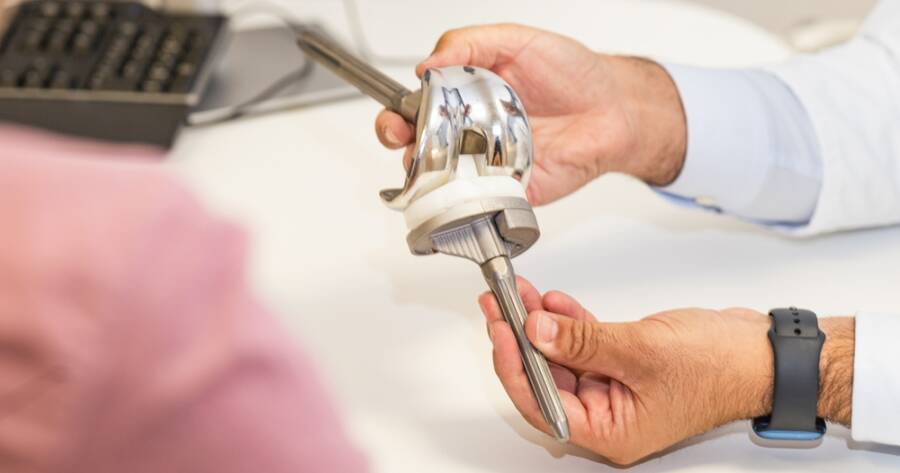
Knee replacement device lawsuits are putting several manufacturers under renewed scrutiny as patients report loosening, instability, recalls, and revision surgeries. While Exactech remains a major current focus, other companies have also faced claims or recall questions. Patients should have a firm understanding of specific devices, alleged defects, and the medical harm documented.
Exactech Faces Recall and Bankruptcy Scrutiny
Exactech remains one of the most visible names in current knee replacement litigation. The FDA has warned that many Exactech knee, ankle, and hip replacement devices were packaged in defective bags that may allow oxidation, which can degrade plastic components over time (source). This can lead to faster device wear, failure, cracking, fracture, bone loss, and corrective revision surgery.
The company has also faced financial and legal pressure. Exactech filed for Chapter 11 bankruptcy in October 2024, with the bankruptcy case pending in Delaware (source). In 2025, Exactech agreed to pay $8 million to resolve False Claims Act allegations involving allegedly defective knee replacement devices billed to Medicare, Medicaid, and the Department of Veterans Affairs (source). That government settlement is separate from individual injury claims, but it adds to the broader scrutiny around the company’s devices.
Zimmer Biomet Claims Have Focused on Loosening
Zimmer Biomet has also been tied to knee replacement litigation and recalls. One FDA recall entry for the Persona Trabecular Metal Tibial Plate cited increased complaints of loosening and radiolucent lines (source). Those issues matter because loosening is one of the most common allegations in knee implant failure claims.
Zimmer’s NexGen litigation shows how these cases can move through the courts over many years. LegalClarity reports that Zimmer NexGen lawsuits were primarily handled through multidistrict litigation, with more than 1,700 federal lawsuits at the MDL’s peak (source). Zimmer settled the remaining NexGen lawsuits in 2018, but the settlement terms were not disclosed (source).
DePuy Attune and Sigma Claims Raise Design Questions
DePuy Synthes, a Johnson & Johnson company, has faced claims involving Attune and Sigma knee systems. DePuy knee replacement lawsuits are typically filed individually rather than as class actions, and that claims may involve early device failure, severe pain, infection, bone loss, instability, or revision surgery (source).
The DePuy claims are important because they show that not every knee replacement case follows the same litigation path. A patient may have a claim based on alleged tibial debonding, early loosening, instability, or another device-specific problem. That makes implant records, operative reports, imaging, and revision notes especially important.
Smith & Nephew Recalls Add Another Manufacturer to the List
Smith & Nephew has also appeared in knee replacement recall discussions. The FDA posted a Class II recall for the Journey BCS Knee System in 2018 involving Journey BCS Oxinium knee femoral components (source). The FDA also posted a later Class II recall for a Journey II BCS constrained articular insert in 2023 (source).
Those recall entries do not mean every Smith & Nephew knee implant failed or every patient has a lawsuit. They do show why patients are often urged to confirm the exact model, component, lot number, and recall status before assuming their symptoms are tied to a device defect. A recall may help guide investigation, but the patient still needs medical proof of harm.
Stryker and Arthrex Show Different Types of Device Concerns
Stryker’s ShapeMatch Cutting Guides show that knee replacement scrutiny is not limited to implanted parts. The FDA classified the ShapeMatch recall as Class I and described the product as patient-specific surgical instrumentation used to help position total knee replacement components during surgery (source). That type of recall raises different questions than a claim about plastic wear, loosening, or oxidation after implantation.
Arthrex iBalance has also been named in knee replacement discussions. The FDA posted a Class II recall for Arthrex iBalance TKA Tibial Tray components in 2016 (source). Arthrex iBalance, DePuy Attune, and Zimmer NexGen are among knee implants named in lawsuits that commonly allege loosening, instability, and revision surgery (source).
Manufacturer Scrutiny Starts With the Device Record
Knee replacement lawsuits against manufacturers are not one-size-fits-all cases. Exactech, Zimmer Biomet, DePuy, Smith & Nephew, Stryker, Arthrex, and Sulzer have appeared in different legal or recall contexts, but each case depends on specific facts.
Patients who suspect implant failure should focus on documentation. The key records include the implant sticker, surgery report, recall notice, imaging, doctor notes, revision surgery records, medical bills, and proof of missed work. Manufacturer scrutiny may start with a product name, but a claim usually moves forward only when the medical and legal evidence match.